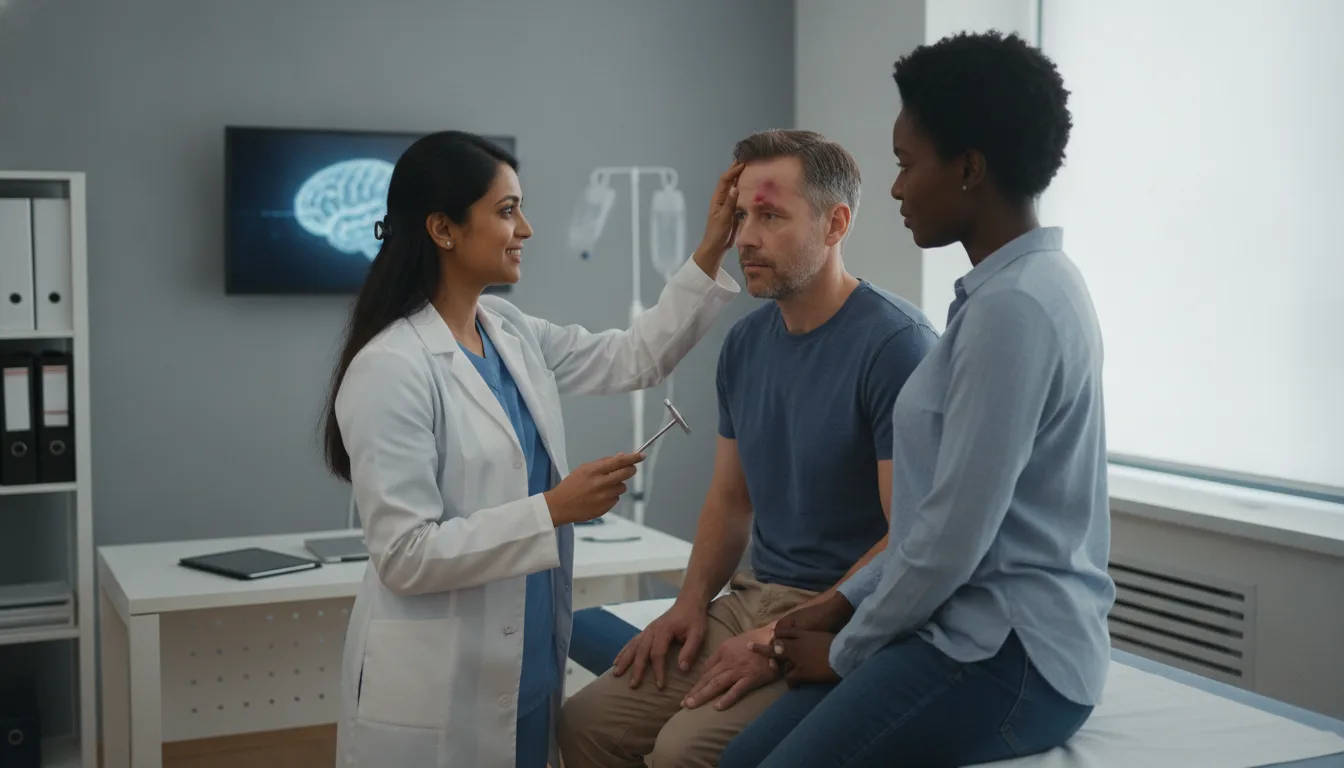
Summary: Seek urgent medical care if numbness after a head injury is accompanied by danger signs such as weakness, decreased coordination, slurred speech, or unequal pupil size, as these may indicate serious complications like brain swelling or bleeding. If numbness persists beyond 24 hours without other symptoms, consult a healthcare provider to ensure proper recovery and prevent long-term issues.
Every year, 3.8 million sports and recreation concussions happen in the United States, according to the Mayo Clinic Health System 2014. For the person hurt, that huge number shrinks to one uneasy moment. A blow to the head leaves them asking whether an ice pack is enough, or whether the emergency room is the right place. Knowing persistent numbness after head injury when to seek care matters because symptoms that look small can be the first clue that something dangerous is changing inside the skull. If numbness shows up with other warning signs, waiting is a bad trade. The risk is not just pain. It can be permanent brain injury.
Key Takeaways
- Numbness is a danger sign: The Centers for Disease Control and Prevention 2024 names numbness, weakness, and decreased coordination as danger signs that call for immediate emergency evaluation.
- Emergency care is mandatory for specific symptoms: Seek emergency care after a head injury if there is loss of consciousness, repeated vomiting, or headaches that keep getting worse, as noted by the Mayo Clinic 2026.
- Persistent symptoms require follow-up: According to the Cleveland Clinic 2023, any symptom that continues 24 hours after the injury, or lingers beyond two weeks, needs a healthcare provider’s attention.
- Referral is necessary for non-recovery: Clinical guidelines cited by PMC 2012 say patients who show no improvement within one to three months should be sent to specialized brain injury services.
- Identify neurological deficits: Medical professionals stress that any focal neurological deficit, including loss of sensation or ongoing tingling, after a significant head impact needs immediate assessment, per NICE 2023.
At a Glance
| Symptom Category | Immediate Action (Emergency) | When to Follow Up (Non-Emergency) |
|---|---|---|
| Numbness/Weakness | Call 911 right away | Still present after 24 hours |
| Headache | Worsening/severe | Lasting beyond two weeks |
| Consciousness | Any loss or confusion | Feeling foggy/slow |
| Vomiting | Repeated/forceful | Persistent nausea |
When is numbness after a head injury a medical emergency?
Numbness after a head injury becomes a medical emergency when it appears with other "danger signs" identified by the Centers for Disease Control and Prevention 2024. Those signs can mean the brain is being squeezed by a bleed or swelling, and that situation can require urgent surgery or other clinical care to stop permanent injury. If sudden numbness, weakness, or poor coordination shows up, call 911 or go to the nearest emergency department at once. Waiting to see whether it fades is the wrong move.
The Mayo Clinic 2026 also lists slurred speech, one pupil larger than the other, and trouble recognizing people or places. Those signs suggest more is happening than a routine concussion. A dangerous blood clot can, in rare cases, press the brain against the skull, and things can change fast. If you are unsure, treat it like an emergency. It is better to have a medical team rule out a brain bleed than to brush off a warning sign that could leave lasting neurological damage. If you are stable but do not know where to go, the ClinicsList FAQ page can help you find local care.
Why does numbness persist after a head injury?
Numbness that hangs around after a head injury can come from direct nerve damage, a mild traumatic brain injury, or stress tied to the accident itself. A sudden loss of feeling is a warning sign. When tingling or reduced sensation sticks around, it can mean the nervous system is still recovering, or that swelling is pressing on nerve pathways. The Cleveland Clinic 2023 notes that concussion symptoms usually resolve within two to six weeks.
If the numbness does not go away, write down exactly when it shows up and what seems to bring it on. Sometimes it fits post-concussion syndrome, where the brain’s signaling is temporarily scrambled. Other times the neck or spine was injured in the same event. If you’re dealing with physical discomfort, you can reach out to providers through the DDS Collective for professional input. Keep a symptom journal. It helps your doctor sort out a local nerve problem from a central nervous system issue. The feeling described as “as if through a layer of numbness” is one clinicians use when they’re checking cognitive and spatial awareness after trauma.
What is the timeline for seeking non-emergency medical care?
You should talk to a healthcare provider if symptoms are still there 24 hours after a head injury, even when they don’t seem severe. If they last two weeks or more, you need a professional evaluation to make sure recovery is moving in the right direction and to check for longer-term complications. According to the Cleveland Clinic 2023, waiting for symptoms to fade on their own is not recommended when they get in the way of daily life.
Regular visits let your doctor watch for changes in your physical and cognitive state. If you’re unsure which type of facility is right, you can use our Free Patient Review Request Kit to see how other people have rated the clinics in your area. Plenty of people put off care because they think concussions are not serious enough for a visit. That’s a mistake. Specialized management can speed recovery quite a bit. If you or a loved one was injured in Abbeville, a local clinic that actually answers quickly should be near the top of your list. Don’t treat lingering numbness as normal. Early intervention matters for long-term brain health.
When should a patient be referred to a specialist?
A patient should be sent to a specialized brain injury setting if they do not improve within one to three months after the injury. Clinical guidelines published in PMC 2012 say that symptoms which keep going and do not respond to standard primary care need a broader, multidisciplinary approach to pin down the cause. That kind of care brings together people who work in cognitive, behavioral, and physical rehabilitation.
If a primary care provider cannot make real progress within two months, asking for a referral to a neurologist or a specialized concussion clinic makes sense. Other medical conditions, or health issues that were already there, can make recovery messier. Those patients tend to do best when several kinds of specialists get involved early. You can use our Free Clinic Ad Compliance Checker if you’re comparing clinic capabilities and want to check whether a facility meets regulatory standards for specialized care. Look for a place that handles complex neurological cases. Those clinics have the tools to tell lingering MTBI symptoms apart from other neurological problems that may have nothing to do with the injury.
What are lab results notification requirements for physicians?
Laws differ from place to place, but physicians usually have to tell patients about lab results in a timely way. That matters most when the result could change how a head injury is treated. Patients should not be left wondering what their tests showed. After trauma, uncertainty can become its own problem.
Good communication means abnormal results get passed along quickly, along with plain instructions about what happens next. If you run a clinic or work in one, your contact methods need to be compliant and easy for patients to use. Waiting days for an important result can slow treatment that should have started already. If you think you are missing information, call the office and ask for a summary of your test status.
What are rehydration clinics for?
Rehydration clinics, sometimes called IV hydration centers, give fluids to people who are dehydrated from illness, heat, or plain exhaustion. They are not set up for acute brain injury, though people who are otherwise stable do use them for symptom relief. For someone recovering from a mild TBI, hydration matters for thinking and alertness. These clinics do not treat neurological problems like ongoing numbness.
If a doctor has cleared you and you still cannot keep fluids down, a clinic like this may be an option. It should never take the place of an emergency visit when symptoms are getting worse. These places mainly provide fluids and electrolytes for physical depletion. Do not try to handle a head injury at an IV clinic before a neurologist or primary care physician has checked for serious trauma.
How can psychological factors influence recovery from head injury?
Psychological factors can shape recovery after a head injury in a big way. Anxiety and stress can make headaches and numbness feel worse, and they can stretch out the healing process. The Cleveland Clinic 2023 points out that mental health support matters for patients with symptoms that linger. That kind of support can change how recovery goes.
Adding mental health care to the recovery plan can help people handle stress and anxiety, which may also calm some physical symptoms. CBT and mindfulness practices can help patients deal with the mental strain that follows a head injury. If you are struggling emotionally after the injury, tell your healthcare provider. They can point you to mental health services that fit your situation. Healing is not only about the body, and mental well-being plays a major role in the process.
Conclusion
Start by looking at the rest of the symptom picture if numbness keeps going after a head injury. If you have any danger signs, such as a worsening headache, weakness, confusion, or repeated vomiting, go to the emergency department right away. If you are otherwise stable and the numbness has lasted past 24 hours, book a visit with your primary care provider in the next few days and talk through your recovery. This guidance does not fit cases where you already have a chronic nerve condition that has nothing to do with the injury, since the numbness may have another cause. Even then, a doctor should confirm that. Professional evaluation beats self-diagnosis when your long-term health is on the line.
Frequently Asked Questions
Is numbness in the hands or feet a sign of brain injury?
Yes. Numbness in the hands or feet can point to a brain injury. The Centers for Disease Control and Prevention 2024 says weakness and numbness count as warning signs after a blow to the head. Those same feelings can also come from nerve damage in the neck or limbs, which is why they still need prompt medical evaluation. Until a doctor checks what’s going on, treat it like a neurological emergency.
How long does it usually take for numbness to go away after a concussion?
Most concussion symptoms, including mild sensory changes, clear within two to six weeks, according to the Cleveland Clinic 2023. Recovery doesn’t follow one timetable. Some people improve quickly, while others take longer. If numbness is still there 24 hours after the injury, get checked by a healthcare provider. When it lasts longer than two weeks, a follow-up exam is needed to help avoid lasting problems.
When should I be worried about a headache after a head bump?
A headache deserves concern when it gets worse over time, refuses to fade, or shows up with other warning signs such as vomiting, confusion, or slurred speech. The Mayo Clinic 2026 treats a worsening headache as an emergency. If the pain is staying put, or it’s making you uneasy, medical care is the safer move. That’s how you rule out a brain bleed.
Should I go to the ER if I have numbness but no headache?
Yes. After a head injury, numbness alone can justify emergency care, even when there’s no headache. The Centers for Disease Control and Prevention 2024 lists numbness and poor coordination as warning signs on their own. Those symptoms can mean the nervous system is under strain. Pain doesn’t have to be part of the picture for the situation to be serious.
Related reading
- Dr Rajroop Bhullar: A 2026 Guide to Pediatric Care
- How to Choose a Pediatrician: A 2026 Parent's Guide
- Urgent Care Regulatory Compliance in 2026: Key Strategies
- Dental Associate Placement for Long-Term Fit in 2026
Sources
- Concussion symptoms & treatment - Mayo Clinic Health System
- Symptoms of Mild TBI and Concussion | Traumatic Brain Injury & Concussion | CDC
- Concussion - Symptoms and causes
- Post-Concussion Syndrome: What It Is, Symptoms & Treatment
- Clinical practice guidelines for mild traumatic brain injury and persistent symptoms
- Recommendations | Head injury: assessment and early management | Guidance | NICE