
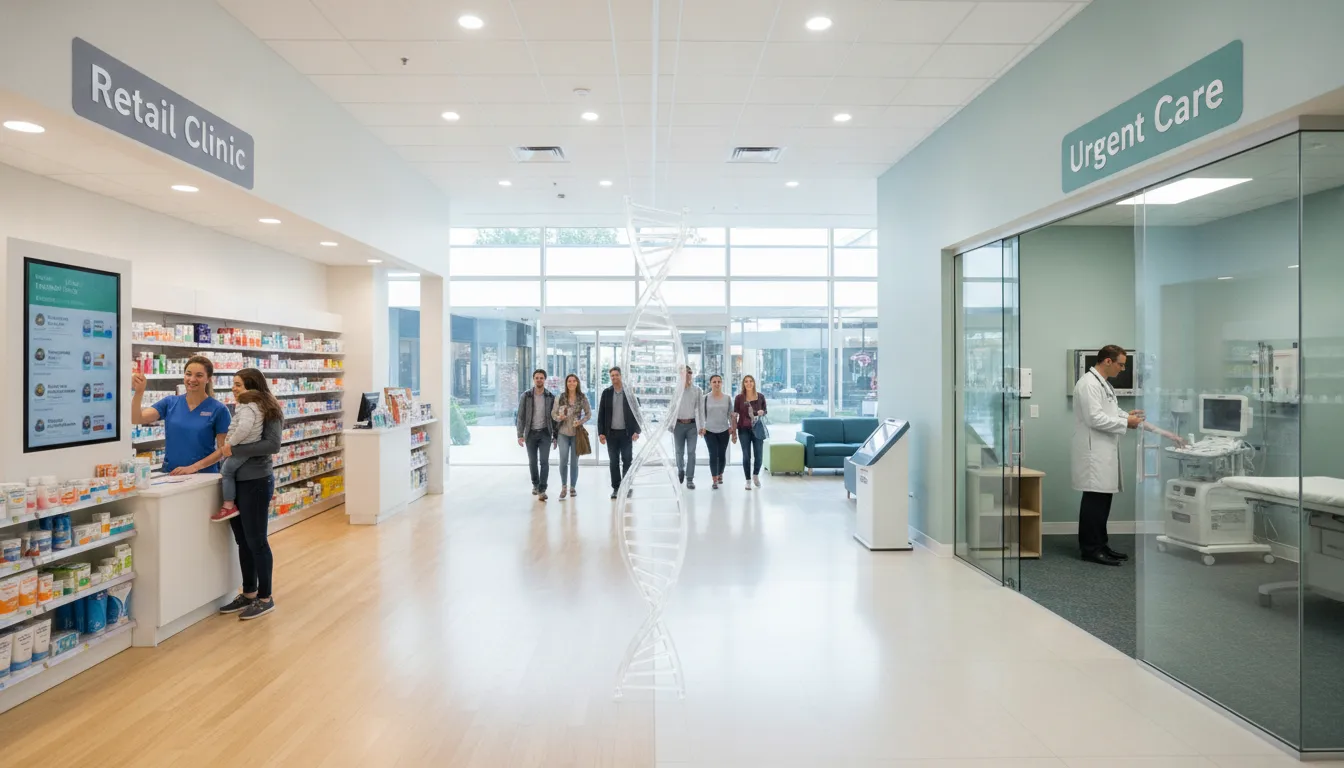
Summary: The article discusses the shift in patient preferences towards urgent-care centers and retail health clinics for quick, convenient medical attention, including follow-ups with specialists like the cardiovascular specialist of Texas. These clinics prioritize speed, transparency in pricing, and accessibility, which are increasingly important to patients seeking immediate care for non-emergency issues.
Today, about 30% of Americans now head to urgent-care centers and retail health outposts when they need help fast. Traditional primary care still matters. But for many short-notice problems, the waiting room has lost the argument.
That shift has changed what patients expect. They want to be seen quickly, to know the price before the visit, and to avoid sitting around for half the afternoon. When the issue is a respiratory infection or a follow-up with a cardiovascular specialist of texas, convenience usually wins.
If you want to understand where outpatient care is heading, follow the money and the workflow. The staffing mix, payer contracts, and daily routines inside these clinics decide whether they stay afloat or slide into trouble. Running one in a crowded retail health market means keeping costs down without turning the place into a bad bet for patients.
For healthcare entrepreneurs, medical directors, and ambulatory operators, this is the part that matters. A clinic built around convenience can last. One that ignores it usually doesn't.
Key Takeaways
- Urgent-care popularity: About 30% of Americans now use urgent-care facilities as their first stop for non-emergency care.
- Retail clinics' growth: Retail health sites are spreading inside grocery stores, pharmacies, and big-box centers, helped by longer hours, posted prices, and easy access.
- Patient satisfaction: Clinics with strong satisfaction scores, such as Kaweah Health, tend to keep patients coming back.
- Marketing impact: Targeted patient outreach through platforms like Clinads can raise local awareness and booking volume.
- Telehealth integration: Modern practices now pair virtual triage and video visits with in-person care.
How Do Retail Clinics Operate?
Retail clinics are small care suites tucked inside busy commercial spaces. Grocery stores, pharmacies, and big retail chains are the usual homes. The model is simple. See lots of patients, keep overhead low, and stick to protocol-driven care for minor illnesses, basic testing, and routine screenings.
They do best with straightforward problems. Strep throat, pink eye, minor rashes, seasonal allergies, and routine shots fit the model well. Visits are usually short, often around ten to fifteen minutes, and the staffing plan leans on advanced practice registered nurses and physician assistants working under collaborative practice agreements. That keeps labor costs in line and still supports solid care.
Putting care inside a place people already visit cuts down on friction. Someone can buy groceries, pick up a prescription, and get treated in one trip. Evening and weekend walk-ins help too. Many operators also tie their electronic health records to mobile apps, so patients can check wait times, register from home, and send prescriptions straight to the pharmacy.
These clinics also fill a public health role. They handle biometric screenings, work physicals, and flu shots without sending everyone to the emergency room. That matters. Their posted prices are often easier for self-pay patients and people with high-deductible plans to live with.
What Defines Urgent-Care Clinics?
Urgent-care clinics stand apart for a simple reason. They take walk-ins.
Some are independent. Some sit inside a hospital network. Either way, they handle unscheduled outpatient visits for acute illnesses and injuries that need attention soon, but do not belong in the emergency department. On site, they often have X-ray equipment, basic lab testing, and the tools for minor procedures.
That puts them in a different lane from retail health outposts. A retail clinic may handle a sore throat or a flu shot. An urgent-care center can deal with a displaced fracture, a deep cut that needs layered closure, an abscess that needs draining, a mild chemical exposure, or an asthma flare that needs prompt treatment. The doors stay open late, usually every day, and often for twelve hours or more. Patients come after work, after practice, after the primary care office has shut its lights off.
The staff mix is broader too. Board-certified physicians, often from emergency medicine or family practice, work with advanced practice clinicians, medical assistants, and radiologic technologists. The point is speed with some real clinical depth. A digital X-ray, a quick blood test, or an ECG can rule out trouble fast and keep a patient out of a crowded hospital queue.
And when the case is too big for the clinic, the handoff matters. Urgent-care groups usually keep transfer agreements with hospitals and specialty practices. If someone walks in with signs of a heart event or severe abdominal pain, the clinic stabilizes them and moves them on quickly. No drama. Just the next step.
How Do Clinics Balance Quality and Cost?
They keep costs in check by being disciplined. Standard treatment pathways help. So does cross-training. So does automation that removes clerical clutter.
The best-run clinics avoid sloppy variation in care. That means fewer pointless tests, less overprescribing, and less money leaking out through overhead. It also means patients get a more predictable visit, which is boring in the best possible way.
Digital systems matter here, though I’d avoid the usual grand claims. Cloud records, intake portals, and telehealth tools can cut chart delays and reduce the number of people needed for paperwork. That saves time. It also saves money. For advertising, the rules still matter, and they matter a lot. Clinics have to stay inside regional and federal marketing requirements, and they can use our Free Clinic Ad Compliance Checker to check campaigns and keep them aligned.
Supplies are another place where small mistakes become expensive. Clinics buy gloves, protective gear, rapid tests, common medications, and other everyday items through group purchasing deals when they can. They also watch inventory closely. If stock sits too long, it expires. If nobody tracks it well, cash just sits on a shelf.
Quality tracking closes the loop. Medical directors review charts again and again, watch whether clinicians follow national standards, and look closely at antibiotic use for upper respiratory infections. That cuts bad outcomes, lowers malpractice exposure, and keeps people from coming back a week later with the same problem.
What Role Does Marketing Play in Clinic Success?
A clinic can be clinically solid and still struggle if nobody knows it exists. That part is blunt, but true.
Marketing drives patient volume, shapes the clinic's local reputation, and turns one-time walk-ins into repeat visitors. In practice, that means people in the area need to know where to go when they need care fast. They also need to trust the place before they are standing in line.
Specialized healthcare growth agencies such as Clinads can help with local search, paid campaigns, and reaching patients during active medical searches. Proximity matters. Online reviews matter too. If people are choosing between nearby urgent-care sites, the map listing and the rating often do the talking before any receptionist does. Clinics can also gather patient testimonials and raise their public rating with our Free Patient Review Request Kit.
Local relationships help in a different way. Clinics often work with employers, school districts, and youth sports groups. That can bring in pre-employment exams, commercial driver physicals, and sports clearance visits. These are not glamorous services. They pay the bills.
Educational posts can pull their weight too. Seasonal illness updates, preventive care notes, and local health news give a clinic a steady public voice. Clear wait times help as well. People notice honesty. When a clinic shows its queue online, trust tends to rise, even in the slow summer months.
How Are Clinics Adapting to Telehealth?
Clinics are folding telehealth into the same systems they already use for scheduling and follow-up. That part matters. It lets urgent-care teams sort out simple acute complaints, handle remote check-ins, and keep more of their service area covered without asking every patient to come through the front door.
Virtual visits are a good fit for low-complexity problems, like seasonal allergies, basic rashes, refill requests, and routine lab review. Patients skip the drive and the waiting room. Staff can save in-person slots for people who need hands-on exams, imaging, or wound care.
There’s another benefit that’s easy to miss. A clinician working from one site, or from home, can cover virtual overflow for several clinics when walk-in traffic surges. That helps balance the load across a retail-style clinic network, where one crowded location can otherwise drag down the rest.
Telehealth also gives clinics a cleaner way to handle chronic monitoring and quick follow-up visits. After an urgent-care appointment for an asthma flare or a skin infection, a provider can check in forty-eight hours later and see whether treatment is doing its job. Fewer loose ends. Better continuity.
How Do Clinics Ensure Patient Satisfaction?
Speed helps. So does clarity.
Clinics that keep patients happy usually cut down the time spent getting from the parking lot to the exam room. They post prices clearly, keep the place clean, and make sure staff sound like they actually want to help. That sounds basic because it is. Patients notice.
The waiting room experience matters too. Online check-in, live wait updates, and pre-registration links sent to a phone can shave off a lot of frustration before anyone reaches the desk. If paperwork is already done, people move faster from reception to the exam room. Front-desk staff who know how to calm an anxious patient can make the whole visit feel less harsh.
What clinicians say matters as well. When a doctor or advanced practice provider explains the diagnosis plainly, walks through the treatment choice, and gives a realistic recovery timeline, trust goes up. So does satisfaction. Written discharge instructions and portal summaries help keep that explanation from evaporating on the way home.
Follow-up closes the loop. Texted satisfaction surveys sent within twenty-four hours give leadership useful feedback, and fast response to a bad experience can stop a small complaint from turning into a public mess. Clinics that do this well look less like a waiting room and more like a service business that happens to treat sick people.
How Can Clinics Navigate Regulatory Challenges?
By taking compliance seriously, and keeping it boring.
That means internal audits, up-to-date staff training, and a steady eye on privacy rules, billing rules, and workplace safety requirements. Federal, state, and local mandates change, and clinics that ignore them can end up paying for it in fines, lawsuits, or lost accreditation.
HIPAA and related data protection rules mean more than a policy binder on a shelf. Electronic records, intake portals, and telehealth tools need strong encryption. If a clinic wants to review its public-facing marketing for healthcare advertising compliance, it can use our Free Clinic Ad Compliance Checker.
Waste handling, OSHA standards, and state licensing rules also sit in the mix. Urgent-care sites with in-house labs have to keep CLIA certification in order, along with daily calibration logs, quality control records, and proficiency testing files.
Billing is its own trap. Evaluation and management coding has to be accurate, and clinics need to avoid upcoding and unbundling. A compliance officer can help keep the paperwork honest, flag problems early, and keep policies from drifting out of date.
Conclusion
Retail clinics and urgent-care centers have settled into a lasting place in outpatient care. They win patients by being easy to reach, plain about prices, and quick to move people through the visit. That matters.
Operators, though, do not get to coast. They have to keep the workflow tight, stay inside the rules, and pay attention to what patients are saying after the visit. The clinics that last are the ones that keep clinical standards high while also running a business that makes sense.
Frequently Asked Questions
What services do retail clinics typically offer?
Retail clinics handle basic outpatient care. That usually means vaccines, routine screenings, physical exams, and treatment for common problems like strep throat, small skin issues, ear infections, and seasonal allergies. The appeal is simple, you get care without much waiting, and the price is usually clear before you walk out.
How do urgent-care clinics differ from emergency rooms?
Urgent-care centers deal with problems that need prompt attention but are not life-threatening. Think simple fractures, cuts that need stitches, sprains, moderate asthma attacks, and minor burns. Emergency rooms are built for the hard stuff, trauma, major surgery, and full resuscitation, and they run all day and night.
Can telehealth replace in-person clinic visits?
No, and it should not be expected to. Telehealth works well for quick triage, medication follow-up, and routine check-ins, but a hands-on exam still matters for imaging, lab work, and procedures. Some care just has to happen in the room.
How important are patient reviews for clinics?
Very important. People look at ratings, wait times, and how providers treat them before they choose a walk-in clinic. Good reviews help a clinic show up better in local search, and they also make strangers feel safer about booking a visit.
What factors should patients consider when choosing a clinic?
Start with location and hours. Then check insurance, self-pay prices, X-ray access, rapid lab testing, satisfaction ratings, online check-in, and telehealth options. Those details tell you a lot about how the place actually works.
Related reading
- Private Healthcare Clinic Business Practices and Patient Protection: What You Need to Know
- Appointment Scheduling and Patient Flow Optimization for Walk-In Clinics
- Overcoming Healthcare Tech Challenges in Small Practices for Better Patient Transparency
- Emergency and Urgent Care Access Barriers: A Patient Guide to Dental Health
Sources
- Clinads (healthcare startup)
- Urgent Care in Vallejo: Clinic or Telehealth Video Visit from Home (clinic)
- OB/GYN – Obstetrics and Gynecology | Kaweah Health (clinic)
- Medicare Counseling (HICAP) - California Department of Aging (clinic)
- Elk Dental Center plans move to larger downtown location | Elk River Star News | hometownsource.com
- Mountain Home Christian Clinic welcomes new director | Baxter Bulletin
- Sen. Kolkhorst celebrates $35M mental health facility for Texas foster youth
- Find a Diabetes Dietitian in West Virginia
- In-Person New Patient Exam
- Dermatologist – Baton Rouge, LA at Louisiana Dermatology Associates (LA Dermatology) (job posting)
- Medical Director - Aesthetics (Dermatology or Plastics) - Georgia at Prairie (job posting)
- Board Certified Dermatologist (MD/DO) at Thomas Dermatology (job posting)
- Petros, Inc. | MedTech Executive Search (healthcare startup)
- Hindsait, Inc. (healthcare startup)
- Pediatric Urgent Care in Anaheim | Walk-In Clinic
- Florida Atlantic Medical Group - Primary Care
- Optum Ear, Nose and Throat (Otolaryngology) - Glen Cove, NY
- Weight Loss Center in St. Augustine | Crescent Beach Care
- Plattsburgh Family Health: Quality Primary Care ...
- COVID-19 cases seeing small spike in some metro Atlanta wastewater – WSB-TV Channel 2 - Atlanta
- Cancer Institute
- Mount Carmel Heart & Vascular Specialists Hilliard
- Christopher Y. Maeda, MD | Bothell, WA - Providence
- Heart Center Doctors in Bradenton | HCA Florida Blake Hospital
- Find occupational health in Midland, MI
- heyclincy.com
- the down and dirty truth of retail health

