
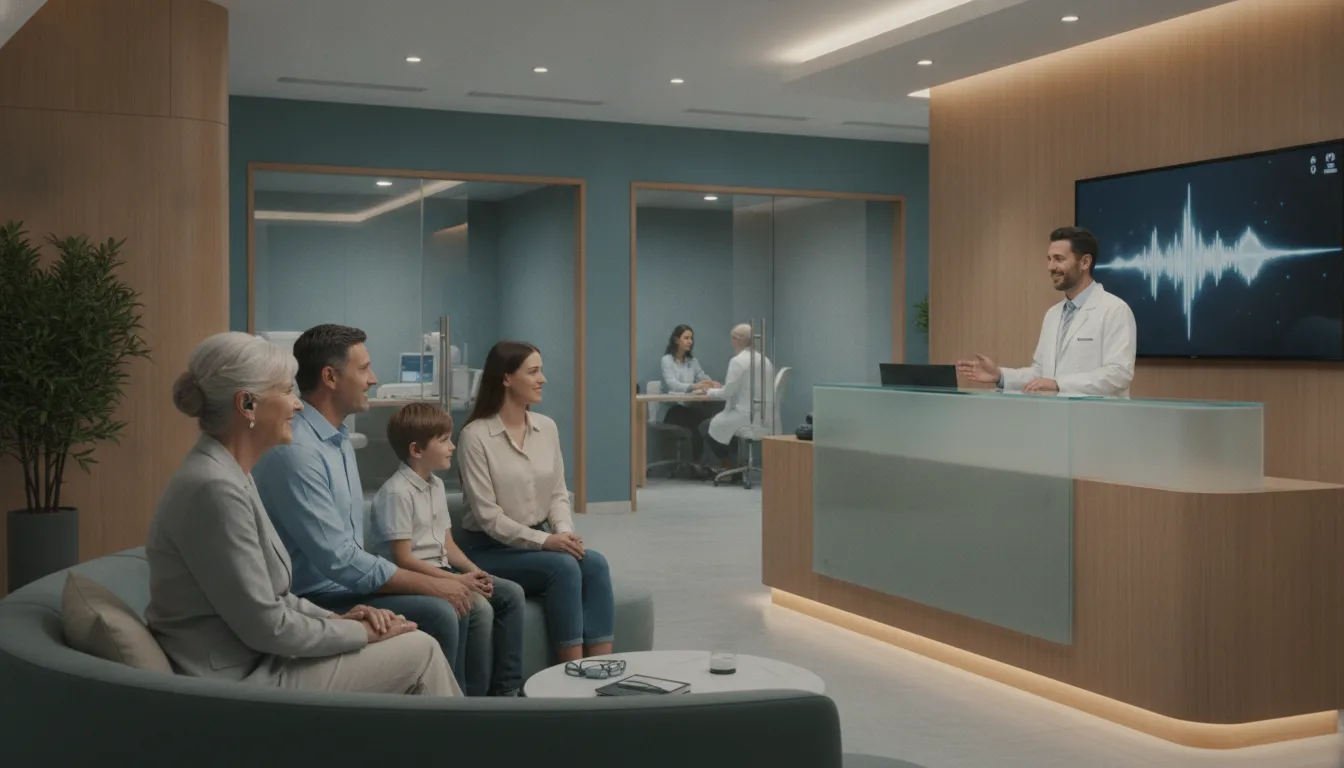
Summary: To find an audiology clinic near you, prioritize those offering comprehensive services like diagnostic evaluations, custom hearing device fittings, and ongoing rehabilitation. Ensure the clinic has high patient satisfaction ratings, is conveniently located, accepts your insurance, and uses advanced technology for precise hearing assessments. This approach will help maintain your long-term communication comfort and cognitive health.
The sudden realization that you are constantly asking family members to repeat themselves often marks the start of a healthcare search. According to the National Institute on Deafness and Other Communication Disorders, 15% of adults in the U.S. report some degree of hearing trouble, making early diagnostic intervention a critical priority. Finding a reliable provider directly influences your long-term communication comfort, cognitive health, and daily quality of life.
When you begin searching for an "audiology clinic near me" across the 93,000 clinics listed in our directory, the sheer volume of choices can feel difficult to filter. Evaluating practices requires looking beyond simple proximity to evaluate clinical capabilities, technology standards, and insurance networks.
This guide outlines the core criteria for evaluating hearing healthcare centers. By assessing diagnostic depth, professional credentials, and follow-up support, you can secure an audiologist suited to your specific medical and auditory requirements.
Key Takeaways
- Service Variety: Prioritize practices that manage everything from initial diagnostic audiograms to custom hearing device fittings, real-ear verification, and balance testing.
- Location Convenience: Choose a facility close to your home or work, because hearing aid tuning and aural rehabilitation demand frequent visits during the first three months.
- Insurance Compatibility: Confirm direct in-network status and itemized out-of-pocket benefit structures for both diagnostic evaluations and hardware before your first visit.
- Technology and Equipment: Opt for practices utilizing computerized real-ear measurement systems and modern acoustic test chambers rather than basic handheld screeners.
- Professional Credentials: Ensure your provider holds a Doctor of Audiology degree along with active state licensure and national clinical competency credentials.
At a Glance
| Clinic Name | Location | Rating | Services Offered |
|---|---|---|---|
| CHI Health Lenox Clinic | Lenox, MA | 5/5 | Family Medicine |
| MD Esthetics | Hyannis, MA | 5/5 | Aesthetic & Wellness Care |
| Norton Clinic | Norton, MA | 5/5 | Massage Therapy |
What Should You Look for in an Audiology Clinic?
A capable audiology practice must provide end-to-end diagnostic evaluations, objective device fittings, and ongoing rehabilitation rather than simple screening tests. Look for full-service providers like Clincy that focus on comprehensive patient care pathways. An exemplary center handles everything from baseline pure-tone audiometry to specialized vestibular assessments under one roof.
Selecting a clinic that provides comprehensive care ensures you do not have to transfer records between separate providers when transitioning from testing to treatment. A full clinical scope should include diagnostic otoscopy, speech-in-noise testing, tympanometry, and custom acoustic device selection. When a practice supports the complete auditory care pathway, clinicians can accurately monitor progressive changes over multiple years.
Comprehensive clinics also supply essential patient education regarding hearing preservation, communicative strategies, and assistive listening systems. Addressing complex conditions like severe tinnitus, auditory processing challenges, or sensorineural degradation requires dedicated testing protocols. Choosing an established center guarantees access to specialized testing rooms and clinical resources that retail hearing aid dispensers rarely maintain.
Before booking, call the office to confirm whether they perform objective verification measures during fittings. Clinics committed to clinical depth will explain their evaluation sequence, hardware trial periods, and long-term care plans clearly.
How Important Are Patient Reviews?
Patient reviews matter a lot for an Audiology Clinic.
They tell you things the website won’t. You can learn whether appointments run on time, whether billing is explained plainly, and whether the staff actually sounds patient when a hearing aid needs another adjustment. In our directory, many listings are highly rated, and those patterns help point to clinics that respect scheduled visits and explain test results clearly.
Reviews also reveal the messy parts of care. Hardware adjustments can be frustrating. Insurance appeals can drag on. When you’re comparing providers, look for comments about clinician patience during hearing aid tuning, clear explanations of audiogram charts, and how quickly the front desk responds. Practice managers who want a more organized read on patient opinion can benchmark their clinic with our Free Patient Review Request Kit.
Not every review matters in the same way. A steady stream of complaints about billing confusion, rushed visits, or slow repair work should make you pause. Repeated praise for thorough hearing aid orientations and careful diagnostic explanations points in the other direction. Recent feedback counts too, because a clinic holding 4.8-star ratings over the last six months looks a lot more reliable than one resting on old praise.
Why Is Location a Key Factor?
Close is better.
An Audiology Clinic near your commute makes follow-up visits easier, and hearing technology usually needs several of them in the first ninety days after fitting. Those visits are where sound profiles get adjusted to real life, not just the exam room.
Distance becomes a bigger deal for older patients, and for anyone depending on family rides or public transit. Multi-site groups, such as MD Esthetics with its 13 offices across various states, show how a wider regional footprint can make appointments easier to keep. If the clinic sits within a 15-to-20-minute drive, an urgent trip for a clogged acoustic receiver or a failed dome is much less of a headache.
Maintenance never really stops. Over a typical four-to-five-year hearing aid lifespan, patients may see their audiologist three or four times each year for deep cleanings, wax guard replacements, and firmware updates. Put that office too far away, and routine care starts to feel like a chore. People skip visits. Devices sit in drawers.
Parking matters too. So do ramps and transit access. A clinic that’s easy to enter is simply easier to use, especially for patients with mobility limits or balance concerns.
How Does Insurance Compatibility Affect Your Choice?
Check the insurance details first.
That step can save you from surprise bills for diagnostic testing, professional fees, and hearing hardware. Policies vary a lot. Some cover pure-tone testing under standard medical benefits, while hearing aid purchases may be left out entirely.
Call your insurer before the first visit and ask about copays, deductibles, and device allowances. Basic diagnostic tests are often covered when a primary care physician orders them, while hearing instruments and fitting services may sit under separate benefit riders. You can also ask the audiology billing department for a written fee breakdown, then compare self-pay package rates with your insurance copays.
Billing codes matter more than most people think. Ask whether the clinic uses unbundled billing, where services and devices are charged separately, or bundled pricing, where the device and follow-up care are packaged together. If your insurer denies coverage for vestibular or electrophysiological testing, a transparent clinic should tell you exactly what happens next.
If your coverage for hearing devices is thin, ask about interest-free healthcare financing, sliding-scale arrangements, or manufacturer trial programs. Good practices usually have some structure for that.
What Role Does Technology Play in Audiology Clinics?
Technology is the line between a real audiology clinic and a room that hands out devices.
Top clinics use calibrated sound booths, real-ear measurement microphones, and high-frequency audiometers. Those tools let the audiologist see how the ear canal behaves in practice, which matters more than a glossy brochure ever will.
Real-ear measurement does the heavy lifting. A probe microphone goes deep into the ear canal, and the clinician checks sound across frequencies in real time. The result is a hearing aid fit shaped for the ear in front of them, not a manufacturer’s guess. Speech stays clearer. Loud noise stays bearable.
Some clinics go further. They keep auditory brainstem response testing, otoacoustic emission systems, and videonystagmography on site, which can help separate ordinary age-related hearing loss from retrocochlear problems or inner-ear fluid issues. That distinction matters.
Ask about real-ear verification for every fitting. Ask about Bluetooth, rechargeability, and auracast-compatible hardware too. A clinic with the right equipment can fit hearing devices with much more clinical precision.
How Do Professional Credentials Impact Your Choice?
Credentials matter because hearing care is medical care.
Board-certified audiologists finish years of doctoral training after college, complete clinical residencies, and keep up with continuing education to stay licensed. They’re trained to look beyond simple hearing thresholds and notice patterns that point to broader auditory or vestibular problems.
Look for the Certificate of Clinical Competence in Audiology from ASHA, or board certification through the American Board of Audiology. Those credentials require serious exams, supervised clinical hours, and ethics standards that aren’t there for decoration. A licensed audiologist can also spot signs that suggest a medical referral to an otolaryngologist.
Hearing instrument specialists work in a narrower lane. They can screen and fit hearing devices, which is useful for straightforward age-related loss. Complex pathologies, asymmetrical losses, and central auditory processing disorders call for deeper training. Check your state licensing board. It takes a few minutes, and it tells you a lot.
A solid clinic should be comfortable showing licenses and certifications where patients can see them.
What Should You Know About Follow-Up Care?
Follow-up is where good fittings turn into usable hearing.
The first weeks after fitting are rarely effortless. Your brain has to adjust to amplified sound, and that usually takes time plus a few rounds of fine-tuning.
A sensible schedule starts with a visit two weeks after fitting, then a one-month real-world check, then another diagnostic follow-up around three months. During those visits, the clinician reviews usage logs, adjusts high-frequency amplification, fixes fit problems, and goes over cleaning. Busy restaurants and meeting rooms are where the flaws show up.
Maintenance matters too. Receiver cleanings, microphone port checks, and moisture removal all help keep the devices working. Ear canals are warm, damp, and full of cerumen. Devices live there anyway.
Before you choose a clinic, ask whether follow-up visits are included, whether loaner devices are available during repairs, and how warranty claims are handled. Those details tell you whether the clinic plans to stick around after the sale.
Conclusion
A strong audiology clinic usually has four things going for it, diagnostic technology, qualified staff, clear billing, and real follow-up care. That mix gives patients a better shot at hearing well as needs change over time. Free Clinic Ad Compliance Checker
Untreated hearing loss can shrink your social life and make work harder. It can also make conversations feel like a chore. Find a regional clinic, book a full diagnostic evaluation, and get the process started.
Frequently Asked Questions
How do I find an audiology clinic near me?
Search specialized medical directories, consult your primary care doctor for referrals, and review patient feedback across independent healthcare review websites. Compare local clinic ratings, verified diagnostic services, in-network insurance status, and audiologist credentials to choose the practice that fits your specific medical needs.
What services should an audiology clinic offer?
A full-service audiology clinic must provide comprehensive diagnostic audiograms, tympanometry, speech-in-noise evaluations, real-ear verification measurements, and personalized hearing device fittings. Many top facilities also offer tinnitus management therapies, custom hearing protection, pediatric diagnostics, and vestibular balance testing.
How can I verify a clinic's credentials?
Confirm your clinician holds an active state audiology license and credentials from the American Speech-Language-Hearing Association or the American Board of Audiology. You can verify active licenses, graduation from accredited doctoral programs, and disciplinary records through your state's online medical licensing database.
What should I expect during my first audiology appointment?
Your initial appointment begins with a thorough medical history review, followed by an otoscopic ear canal examination and comprehensive sound booth testing. The audiologist will discuss your audiogram results, explain speech recognition scores, and outline a personalized treatment or device plan tailored to your hearing needs.
Related reading
- Understanding Professional Sleep Medicine Services for Patients
- Private Healthcare Clinic Business Practices and Patient Protection: What You Need to Know
- The Siloed Portal Is Dead
- Legal and Regulatory Compliance for Clinic Operations: Essential Requirements Every Owner Must Know

